
What is Blue Waffle? (Myth vs Reality)
“Is Blue Waffle a Real Disease?”
Every few months, social media buzzes with frightening images or posts claiming that a so-called “Blue Waffle Disease” is spreading among women.
Patients come to me anxious, sometimes whispering, “Doctor, is this real? Do I have it?”
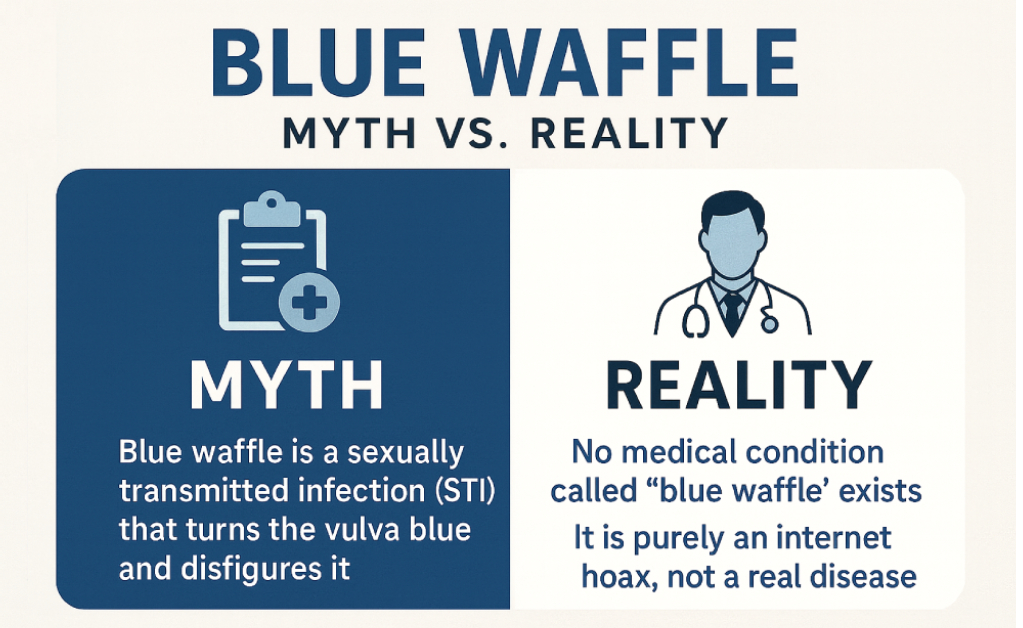
“Let’s be very clear — Blue Waffle is not a real medical disease,” explains Dr. Deepika Doshi, one of the best gynecologist in Borivali.
“It started as an internet hoax, not a diagnosis. There’s no such condition recognized by any medical authority.”
This article breaks down where the myth came from, what real vaginal infections look like, and how women can protect their sexual health confidently.
How the “Blue Waffle” Myth Began
Around 2010, online forums and shock-image websites began circulating disturbing pictures of a “blue-colored infected vagina.” These were digitally edited photos, meant to shock or mislead.
Soon, the fake term “Blue Waffle” — supposedly slang for “blue-colored vulva” — spread across social media. It created unnecessary panic and shame among young women.
“Unfortunately, misinformation spreads faster than truth,” says Dr. Doshi, an experienced obstetrician in Borivali.
“Many teenagers or young adults saw these images and believed they had caught a serious infection after sex. In reality, it was fabricated content — not a scientific condition.”
What Medical Science Actually Says
No credible health organization — not the World Health Organization (WHO), Centers for Disease Control and Prevention (CDC), or Indian Council of Medical Research (ICMR) — has ever documented a disease called Blue Waffle.
There is no infection that turns the vagina “blue” in color.
However, there are real vaginal infections that can cause discomfort, itching, or discharge. These include:
- Bacterial Vaginosis (BV) – imbalance of natural vaginal bacteria
- Candidiasis (Yeast infection) – caused by fungal overgrowth
- Trichomoniasis – a sexually transmitted infection
- Herpes or HPV infections – cause sores or warts, not color change
“Each of these real conditions has distinct symptoms,” says Dr. Doshi. “They’re treatable with proper care — but none of them cause a blue or green discoloration of the vagina.”
Why Do These Myths Go Viral?
Rumors like Blue Waffle spread for a few key reasons:
- Shame and silence: Talking about sexual health is still taboo in many communities, so misinformation thrives online.
- Curiosity and fear: Teenagers searching sexual terms may stumble on fake warnings.
- Lack of awareness: Many women never receive accurate education about vaginal health.
“The internet can educate or mislead — depending on where you look,” says Dr. Doshi. “Always verify information with a qualified gynecologist in Borivali or a trusted doctor.”
Recognizing Real Vaginal Infections
If you ever notice changes in vaginal discharge, color, or texture — don’t panic, but do pay attention.
Some common symptoms of genuine vaginal infections include:
- Itching or burning sensation
- Unusual discharge (white, yellow, or grey)
- Fishy or foul odor
- Pain during urination or intercourse
- Redness or swelling around the vulva
“These signs don’t mean something terrible — they mean your vagina needs care,” reassures Dr. Deepika Doshi, a respected pregnancy and women’s health specialist.
Most infections are easily treated once diagnosed correctly.
When to See a Gynecologist?
You should book a consultation with your doctor if:
- Symptoms last more than a few days
- Over-the-counter creams don’t help
- You develop pelvic pain or fever
- There’s spotting or bleeding unrelated to periods
“Never rely on social media or random websites to self-diagnose,” advises Dr. Doshi. “A quick check-up often solves the issue faster than worrying in silence.”
Her clinics in Borivali and Dahisar see hundreds of women each year for simple concerns that become complicated only because they’re ignored for too long.
The Psychological Impact of Online Health Myths
Fake health stories like Blue Waffle don’t just misinform — they also create fear and guilt. Many women start doubting their hygiene or feel ashamed to talk to doctors.
“Fear shouldn’t stop you from asking questions,” says Dr. Doshi. “The more you learn about your body, the stronger and healthier you become.”
Online myths can even damage relationships when partners believe false claims. The solution lies in open communication and accurate education.
How to Maintain Good Vaginal Health?
According to Dr. Deepika Doshi, here are simple, medically backed steps:
- Keep hygiene gentle: Use mild, unscented soap; avoid harsh douching.
- Wear breathable cotton underwear: Prevents moisture build-up.
- Stay hydrated: Supports natural pH balance.
- Practice safe sex: Use condoms to prevent infections.
- Don’t self-medicate: Always check with your doctor before applying creams or pills.
- Schedule annual check-ups: Early detection keeps you worry-free.
“Good vaginal health is about balance, not perfection,” says Dr. Doshi. “Your vagina cleanses itself — you just need to support it.”
Debunking Other Common Myths
- Myth: “Only sexually active women get vaginal infections.”
Reality: Infections can occur due to hormonal imbalance, diabetes, or antibiotics — not just sex. - Myth: “Discharge always means infection.”
Reality: A little clear or white discharge is healthy and normal. - Myth: “Feminine washes prevent odor.”
Reality: Overuse can actually cause irritation by altering pH.
“I often see women developing irritation because they’re over-cleaning,” says Dr. Doshi. “Less is more when it comes to intimate hygiene.”
FAQs About “Blue Waffle” and Vaginal Health
1. Is Blue Waffle a real STI?
No. It’s a fabricated term; no medical database recognizes it.
2. Why does the vagina sometimes look darker?
That’s natural pigmentation — not infection. Skin color around the vulva varies for everyone.
3. Can an infection make the vagina look blue?
No. Infections cause redness or swelling, not blue discoloration.
4. How can I know if my symptoms are serious?
If symptoms persist, have an unusual smell, or are painful, see a gynecologist in Borivali or nearby clinic promptly.
5. How do I protect myself from real STIs?
Use condoms, avoid multiple partners, get regular check-ups, and never ignore unusual symptoms.
Facts Over Fear
“Women deserve clear, scientific information — not fear from viral hoaxes,” says Dr. Deepika Doshi, one of the best gynecologists in Borivali. “Your body speaks through symptoms; myths only make you ignore them.”
Blue Waffle is nothing more than an internet myth — but it highlights how much misinformation still exists around women’s sexual health.
If you’re ever unsure about your body, talk to a doctor you trust. The truth is simple, treatment is available, and your peace of mind matters most.
📍 Clinic Addresses:
– Dhanvantari Hospital
Dhaval Apartment, Factory Lane, Near Railway Station, Borivali (West), Mumbai – 400092, Maharashtra, India.
📞 Call: 9324263464 / 022 2833 8378
✉️ Email: info@drdeepikadoshi.com
🌐 Visit: www.drdeepikadoshi.com
Accurate knowledge, early care, and open conversation — that’s how every woman can protect her health with confidence.